


The Skin of a Low-Voltage Distribution Panel: Enclosures and Protective Barriers
If a low-voltage distribution panel were a human body, its enclosure would be its skin.
It is the visible part, the one that protects everything inside and the one in direct contact with the environment. But, just like in the human body, its function goes far beyond a simple “outer layer”: it is a key element for safety, durability and the proper operation of the system. In other words, it must fulfill essential functions such as environmental protection, personnel safety and thermal exchange management.
Protection against the environment… and protection for people
The enclosure acts as a barrier between electrical components and the external environment, protecting the system against dust, moisture and environmental agents. However, its most important function is to ensure the protection of people against accidental contact with live parts. This is one of the fundamental principles of low-voltage safety.
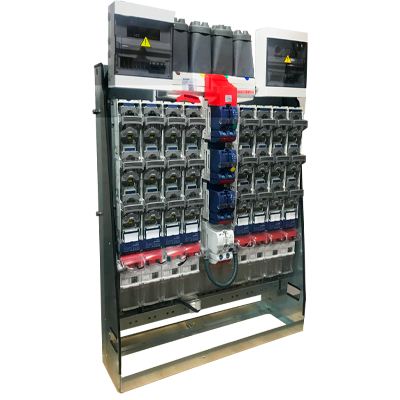
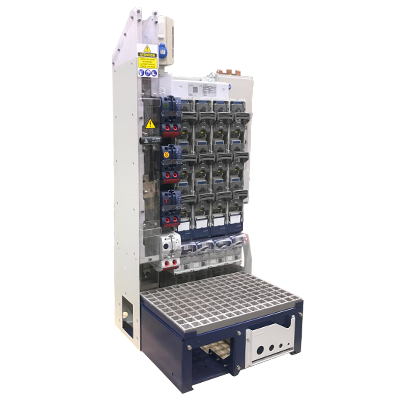
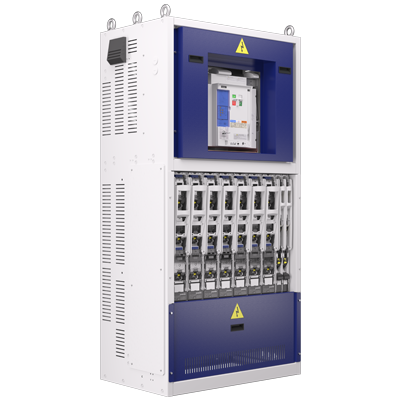
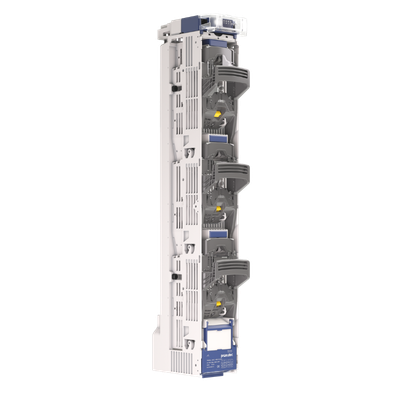
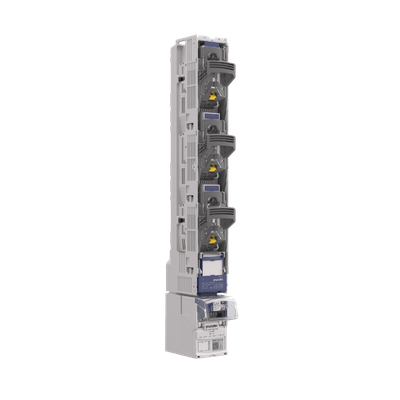
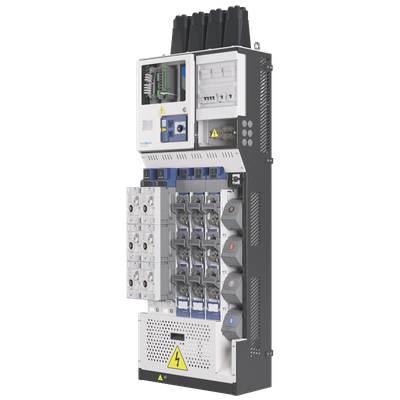
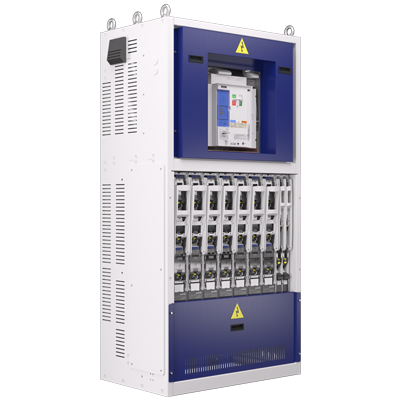
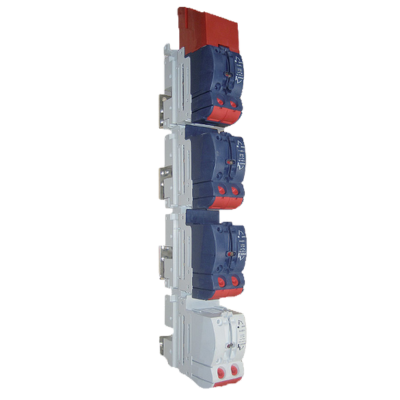
In this regard, the enclosure is not the only element playing a key role. In many panels — especially in industrial or distribution applications — configurations without a closed enclosure may exist, such as open frames designed to improve heat dissipation.
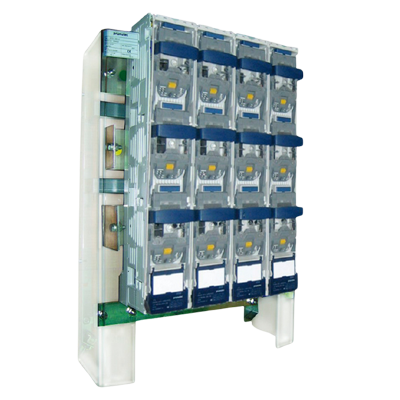
In these cases, protection is achieved through internal barriers, covers and segregation systems that prevent unintended access to live parts.
These internal protections can be compared to additional layers of the human body, reinforcing safety when the outer “skin” is not present or not sufficient.
Installation conditions: indoor vs outdoor
An enclosure designed for indoor installation is not the same as one intended for outdoor use.
Indoor applications usually involve controlled conditions, whereas outdoor installations must withstand solar radiation, rain, humidity, temperature variations and aggressive environments such as salinity or industrial pollution.
These conditions directly determine the design, materials and required level of protection. A poorly selected enclosure is like unprotected skin exposed to the environment: it will eventually degrade and compromise the entire system.
Types of enclosures and materials
Different construction solutions are available depending on the application:
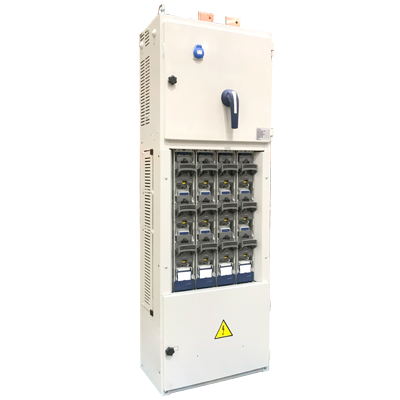
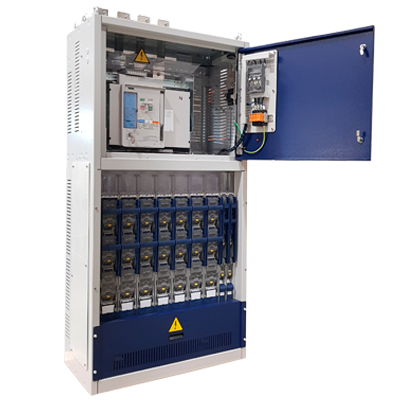
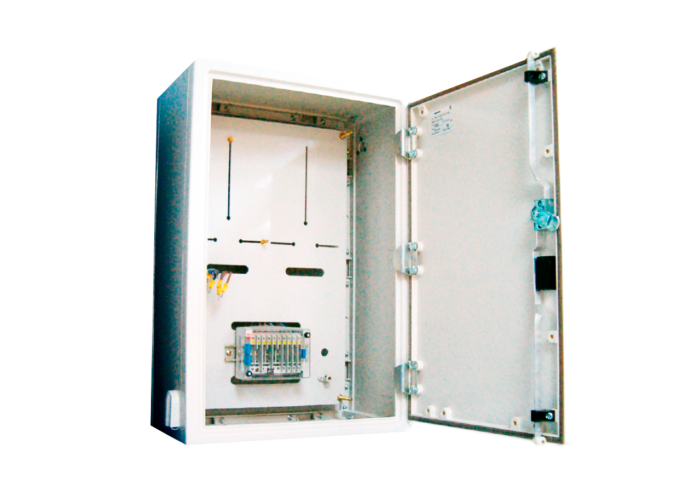
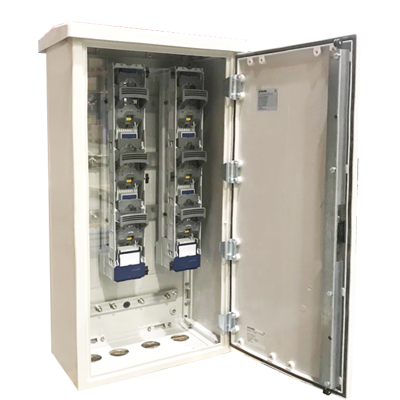
- Metal enclosures (painted or unpainted steel), offering high mechanical strength and widely used in industrial environments.
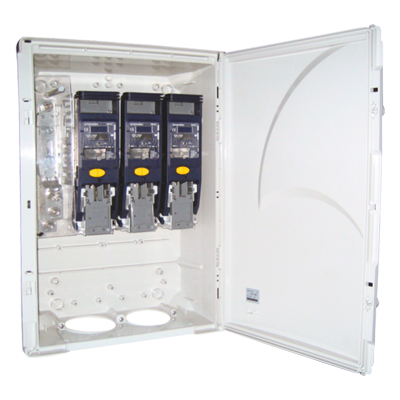
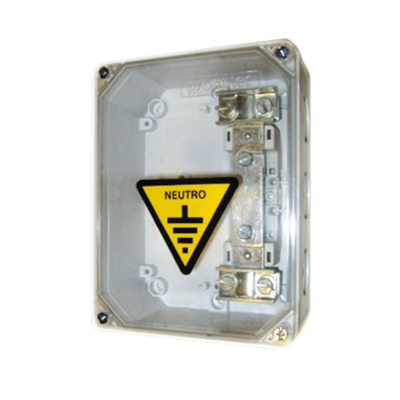
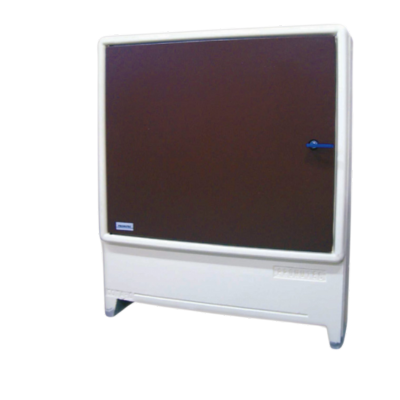
- Thermoset materials (polyester, technical plastics), insulating, particularly suitable for outdoor and corrosive environments, with high thermal stability and excellent ageing resistance.
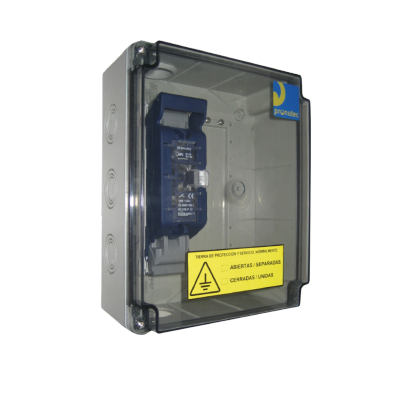
- Thermoplastic materials, insulating, lightweight and corrosion-resistant, with good formability and impact resistance, typically used in applications requiring design flexibility and moderate environmental resistance.
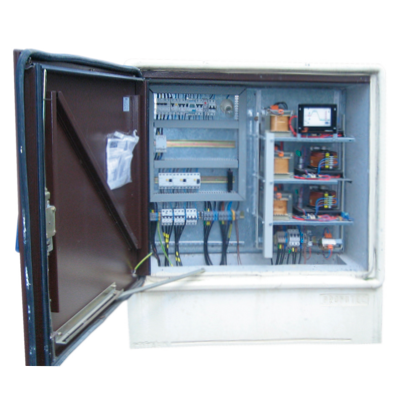
- Concrete enclosures, commonly used in outdoor distribution applications where maximum robustness and durability are required.
Surface finishes are also critical: painted, galvanized or untreated enclosures must be selected according to environmental aggressiveness and expected service life.
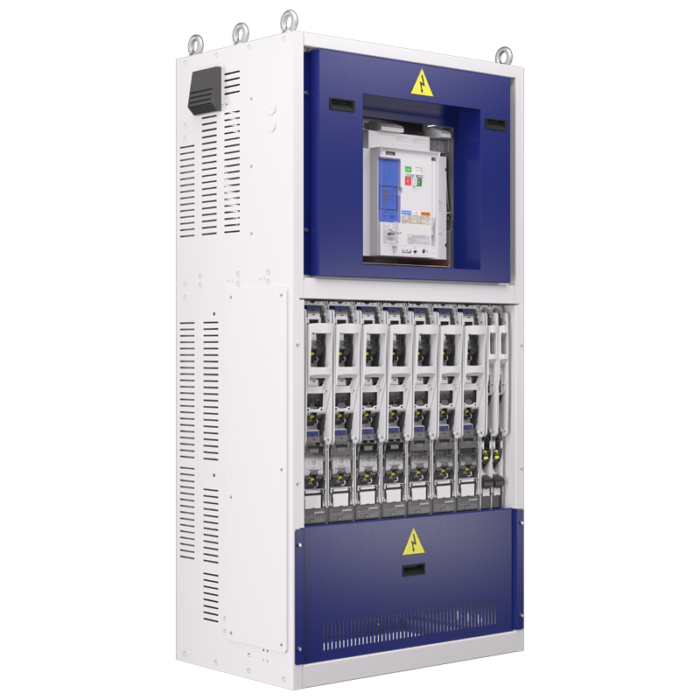
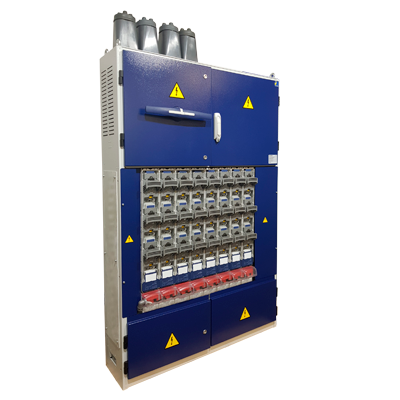
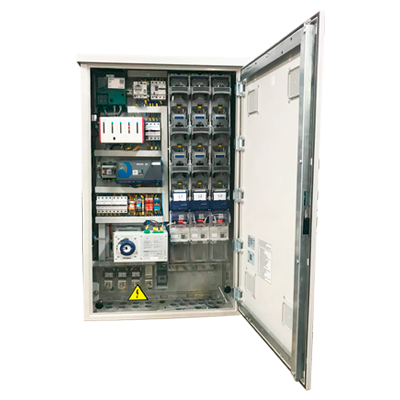
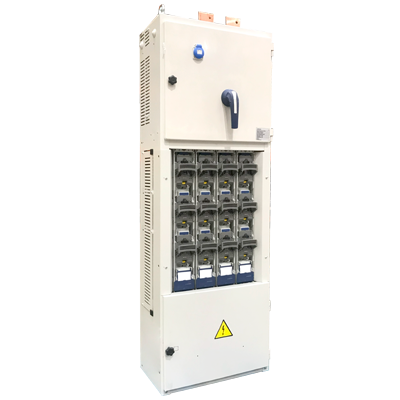
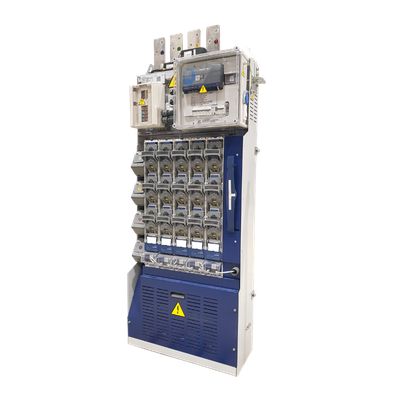
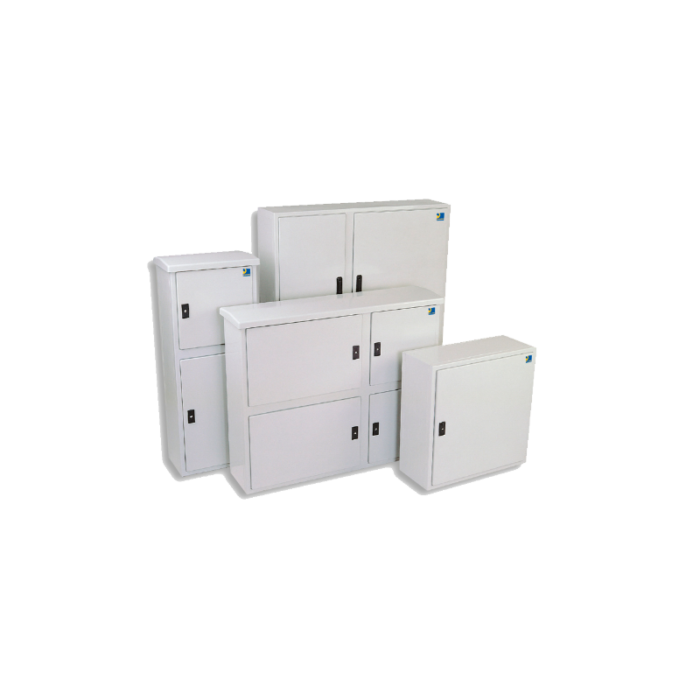
Within the Pronutec low-voltage range, solutions are available in metal, insulating materials or concrete, depending on the application and installation environment. Configurations without enclosure are also available to maximize system ventilation. In such cases, particular attention is given to protection against accidental contact, using barriers and protection systems that ensure user safety.
Degree of protection (IP)
The IP rating defines the level of protection against the ingress of solid objects and liquids. It is not just a theoretical value — it must be maintained under real operating conditions, considering openings, seals, ventilation and cable entries.
However, a higher IP rating is not always better.
The higher the enclosure tightness, the more difficult it becomes to dissipate the heat generated inside. Therefore, the IP rating must be selected according to the installation environment, avoiding unnecessary oversizing, as excessive sealing can negatively impact thermal performance.
For example:
- IP2X → protection against contact (key requirement in IEC 61439)
- IP54 / IP65 → environmental protection
- IP65 → special attention to ventilation
Once again, the analogy is clear: just as the skin regulates interaction with the environment, the enclosure defines how the panel “coexists” with its surroundings.
More than protection: transport and handling
The enclosure not only protects during operation, but must also ensure the integrity of the panel during transport and installation.
IEC 61439 includes specific requirements related to lifting and handling, verifying that the structure can withstand its own weight without deformation or damage. In this sense, the enclosure also acts as a structural element, ensuring that the entire assembly reaches its final destination in perfect condition.
Mechanical resistance: IK rating
Another key aspect is the ability of the enclosure to withstand impacts, defined by the IK rating.
This test evaluates resistance to external mechanical impacts, ensuring that the enclosure can protect internal components against accidental shocks or demanding operating conditions.
This is equivalent to the ability of the human body to withstand external impacts without compromising vital organs.
Pronutec approach
At Pronutec, the enclosure and associated protection systems are designed as an integrated solution, adapted to both the installation environment and the required level of user access.
Special attention is given to protection against accidental contact, through enclosures, barriers and segregation solutions that ensure safety under all operating conditions, even in open configurations.
In addition, materials and finishes are carefully selected for each application, ensuring durability and resistance to external agents.
This approach enables the delivery of robust, safe and reliable solutions, both for indoor and outdoor applications, maintaining system integrity from manufacturing through to operation in the field.
Conclusion
The enclosure is the skin of the electrical panel because it protects everything inside — both from the environment and from human interaction.
But its role goes further: together with internal barriers and protective systems, it defines the level of safety, durability and reliability of the assembly.
Because, just like in the human body, … when protection fails, everything inside is exposed.
Pronutec solutions: enclosure design and configuration
At Pronutec, the enclosure is designed as the element that protects the system from the environment, ensuring both personnel safety and equipment durability.
Our range of low-voltage panels includes different enclosure types, selected according to installation conditions, environment and specific application requirements.
Enclosure types in Pronutec range
| Enclosure type | Characteristics | Application | Advantages / Limitations |
| Metal enclosure (unpainted steel) | High mechanical strength, robust structure | Indoor applications | ✔ Very robust ✔ Easy machining ✔ Fully customizable ⚠ Lower corrosion resistance |
| Painted metal enclosure | Protection against corrosion, increased durability in industrial environments | Indoor applications in demanding environments | ✔ Good environmental protection ✔ Improved aesthetics ✔ Fully customizable ⚠ Dependent on coating condition |
| Thermoplastic insulated enclosure | Lightweight, corrosion-resistant, good impact resistance | Moderate outdoor applications | ✔ Lightweight ✔ Non-corrosive ✔ Good impact resistance ⚠ Thermal limitations at high temperatures ⚠ Range limited by moulds |
| Thermoset insulated enclosure | High thermal stability, excellent ageing and corrosion resistance | Harsh outdoor environments | ✔ Excellent environmental resistance ✔ Thermal stability ✔ Long service life ⚠ Limited range depending on moulds |
| Concrete enclosure | Maximum robustness, high durability and impact resistance | Substations / outdoor applications | ✔ Very robust ✔ High durability ✔ Vandal-resistant ⚠ Heavy and less flexible |
IP ratings available in Pronutec range
| IP rating | Code meaning | Typical application |
| IP1X | Protection against access with the back of the hand (>50 mm). No water protection | Open panels or internal parts without direct access |
| IP2X | Protection against access with fingers (>12 mm). No water protection | Basic internal protection against accidental contact |
| IP20 | Protection against access with fingers (>12 mm). No water protection | Indoor panels in controlled environments |
| IP30 | Protection against solid objects >2.5 mm. No water protection | Indoor installations with increased protection |
| IP43 | Protection against solid objects >1 mm and water spray up to 60° | Protected outdoor or semi-exposed applications |
| IP54 | Dust-protected and protected against splashing water | Typical outdoor applications |
| IP65 | Dust-tight and protected against water jets | Harsh outdoor or aggressive environments |
Esther Plasencia
Head of H&D at Pronutec
Related products

Related News
Pronutec to showcase smart grid monitoring and automation solutions at Enlit Europe 2026
Pronutec will participate in Enlit Europe 2026, taking place from 10 to 12 November in...

The DNA of an LV Distribution Panel: The Engineering That Defines It
If an LV distribution panel were a human body, its DNA would be the engineering...

The Muscular System of a Distribution Panel: Voltage as Working Capacity
If a low-voltage distribution panel were a human body, its muscular system would represent its...


 Gorlan


Pronutec, a  company